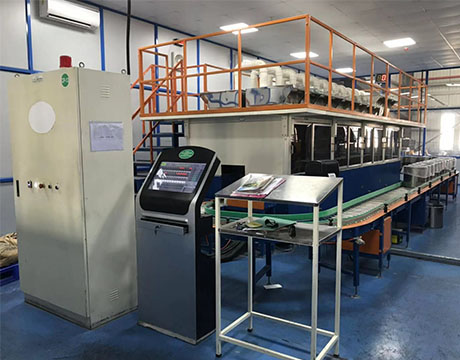
Product Overview
Traditional production lines in rubber, plastic, chemical, food, feed and pharmaceutical industries rely entirely on manual weighing for various additives, which brings multiple industrial pain points: manual reading errors cause unstable product quality; repeated weighing consumes massive labor cost; floating powder leads to serious dust pollution and raw material waste; there is no complete record of formula data for quality tracing; manual feeding without error-proof measures easily results in wrong material mixing and huge production loss.
Our multi-ingredient automatic formula weighing platform scale is developed to fully solve the above problems. This integrated intelligent batching system covers the whole workflow from raw material storage, automatic feeding, high-precision weighing, conveying, secondary rechecking, unqualified material rejection to dust recovery and digital data recording. The equipment supports 6 to 48 SUS304 stainless steel silos, and can automatically weigh 8 to 48 types of powder, pellet and flake chemical additives at the same time.
Three feeding modes including double screw, belt conveyor and electromagnetic vibration feeder are optional to match different material fluidity characteristics. The core weighing unit adopts high-resolution electronic scale with static accuracy ≤±0.1%FS and control precision up to ±2g per batch. Built-in barcode scanning anti-mistake feeding module and automatic recheck rejection station can eliminate wrong feeding and overweight/underweight batches fundamentally. The matched independent bag dust collector ensures closed dust-free operation.
Adopting PLC field bus distributed control architecture, the system realizes multi-station simultaneous weighing to greatly lift production capacity, with continuous output ranging from 200 to 600 bags per shift. All formula records, batch data and equipment operation logs are permanently stored, supporting barcode printing, USB export and remote cloud management, which realizes full life-cycle quality traceability for finished products. The whole machine supports single-layer and double-layer flexible layout, occupying small workshop space, low energy consumption and low operation noise, perfectly matching small and medium-sized fine chemical batching workshops.
Core Advantages
-
Zero human weighing error, dual-layer error prevention mechanism Equipped with barcode scanning feeding verification and secondary weighing recheck & rejection function. Workers must scan material bag labels before feeding silos; mismatched materials cannot enter storage bins. After primary weighing, the rear station will recheck weight data automatically. Once the tolerance exceeds the preset standard, the batch will be automatically rejected to avoid large batch waste caused by wrong formula ratio.
-
High-efficiency multi-station parallel weighing, remarkable capacity improvement Different from single-station serial weighing equipment, this platform scale supports multiple weighing stations working simultaneously. The continuous dosing capacity reaches 200-600 bags per shift, maximum up to 600 bags, greatly shortening the material preparation time for downstream mixing and extrusion production lines. The standard weighing speed can reach 120kg within 120 seconds, hourly output covers 500-1200kg to meet mass production demand.
-
Full closed dust recovery system, clean workshop & zero raw material loss Each silo and weighing unit is equipped with independent bag filter dust collector. The tail gas dust content after purification is controlled below 8mg/m³. All feeding, weighing and conveying links run in closed pipelines and conveying lines, no powder flying or leakage, reducing workshop cleaning workload and saving expensive chemical additives.
-
Digital full-process data management & remote intelligent control The built-in industrial control system integrates formula management, raw material inventory management, batch production record, quality tracing and automatic report printing. All historical data can be exported for cost accounting. It supports remote real-time monitoring, remote after-sales diagnosis and parameter adjustment, helping enterprises realize unmanned digital workshop management.
-
Stable hardware configuration, low failure rate & long service life All core electrical parts, weighing sensors and control modules adopt imported or joint venture well-known brands. The whole control system is built on PLC field bus substation structure, which can self-inspect operating status all the time. Once abnormal faults occur, the system will accurately display fault location and corresponding troubleshooting guidance, shortening maintenance downtime effectively.
-
Flexible layout, wide industry adaptability & energy-saving safe design Two layout options (single-layer / double-layer) are provided according to customer workshop space, suitable for production lines requiring 8 to 48 kinds of additives. The total installed power is only 15-25kW per set with low energy consumption. Complete safety interlock protection devices are installed on silo doors, feeding ports and conveying lines to prevent accidental startup and material leakage, ensuring operation safety.
-
Simple operation with bilingual human-machine interface The touch screen adopts Chinese & English dual-language visual interface with graphic flow display. Operators can complete formula setting, parameter modification, data query and equipment control without professional programming knowledge. Automatic system self-test function reduces daily maintenance difficulty for front-line workers.
Complete Main Technical Parameters Table
| Parameter Item | Standard Specification |
| Applicable types of dosing chemicals | 8 – 48 kinds |
| Electronic scale weighing range | 10 – 50 kg |
| Static weighing accuracy | ≤±0.1% F.S |
| Dynamic weighing accuracy | ≤±0.15% F.S |
| Cumulative weighing accuracy | ≤±0.2% F.S |
| Weighing display instrument division value | 1g / 2g / 5g optional |
| Continuous dosing capacity per shift | 240 – 360 bags |
| Dust content of exhaust after dust removal | ≤8 mg/m³ |
| Whole machine operating noise | <75 dB |
| Total installed power | 15 – 25 kW / set |
| Minimum configurable silo quantity | 6 bins |
| Maximum configurable silo quantity | 48 bins |
| Standard weighing speed | 120 kg / 120 seconds |
| Batch control weighing precision | ±2 g |
| Loading hopper volume & load capacity | 200 L / 140 kg |
| Silo contact material | SUS304 Stainless Steel |
| Hourly production capacity | 500 – 1200 kg/h |
| Feeding available modes | Double screw / Belt / Electromagnetic vibration |
| Control system architecture | PLC field bus distributed substation |
| Operation interface | Chinese & English touch screen |
| Auxiliary functional modules | Barcode anti-mistake feeding, auto recheck & rejection, independent bag dust collector, remote management |
Key System Functional Modules Detailed Introduction
Barcode Scanning Anti-mistake Feeding Module
Before raw materials are poured into each storage silo, operators scan the unique barcode printed on chemical packaging bags. The central control system automatically matches the barcode information with pre-stored silo material codes. Only when information matches completely can the silo discharge door unlock for feeding. If the scanned material does not correspond to the target silo, the door remains locked and the screen pops up error alarm to stop wrong material feeding from the source.
Automatic Secondary Recheck & Unqualified Batch Rejection Module
Every finished weighing batch will be transported to the secondary recheck weighing station via roller conveyor. The system compares recheck weight with target formula weight. When the actual weight difference exceeds the preset precision tolerance, the control system marks this batch as unqualified. The material will keep moving along the circulation line and be automatically pushed out at the rejection valve position, avoiding unqualified additives entering the subsequent mixing process and causing finished product scrapping.
Independent Bag Dust Collector System
Every feeding silo and weighing unit is equipped with a matched pulse bag dust filter. Floating powder generated during blanking and weighing is instantly captured and recycled back to the material circulation system. Purified exhaust gas meets industrial environmental protection standard with dust concentration under 8mg/m³, no cross-contamination between different raw materials, and no waste of high-cost additives.
PLC Field Bus Distributed Control & Remote Management System
Distributed PLC substation layout greatly reduces wiring complexity and improves anti-interference performance in multi-dust industrial workshops. The system automatically detects abnormal conditions such as motor overload, silo blockage, weighing sensor deviation and dust collector pressure loss. The touch screen displays specific fault location and step-by-step maintenance prompts. Supported by cloud data transmission function, engineers can remotely view production data, adjust formulas and conduct after-sales fault diagnosis without on-site visit.
FAQ
Q1: What raw materials and industries is this multi-ingredient weighing platform scale suitable for? A1: It adapts to powder, pellet and flake chemical additives, covering rubber, plastic, fine chemical, food processing, feed production and pharmaceutical industries. Common applicable materials include lubricants, colorants, stabilizers, food additives, medicinal auxiliary materials, feed trace elements and more. It can match 8 to 48 different raw materials simultaneously according to customer demand.
Q2: How many silos can I choose? What if I need more than 48 kinds of additives? A2: Standard optional silo quantity ranges from 6 bins to 48 bins to match 8-48 types of materials. If your production line requires over 48 kinds of raw materials, our technical team can customize extended multi-silo circulation weighing platform scale with double-layer stacked silo layout.
Q3: What is the highest weighing precision of this equipment? A3: The static electronic scale precision reaches ≤±0.1% full scale, and the single batch control precision can be controlled within ±2 grams. The dynamic and cumulative weighing precision also meets strict industrial standards at ≤±0.15%FS and ≤±0.2%FS separately, far higher than traditional manual weighing accuracy.
Q4: How does the anti-mistake feeding function work to avoid mixing wrong materials? A4: The system relies on barcode scanning verification. Each raw material bag carries exclusive barcode, and each silo corresponds to one fixed material code. The silo cannot open for feeding without passing barcode matching verification, completely eliminating manual wrong feeding risks.
Q5: Will powder fly during weighing operation? How about environmental protection performance? A5: The whole machine adopts fully closed circulation conveying structure, each station is equipped with independent bag dust collector. Exhaust dust content after purification ≤8mg/m³, complying with national industrial emission standards. No powder leakage or flying occurs in the workshop, protecting workers’ respiratory health and saving raw material cost.
Q6: What is the production capacity of this automatic weighing platform scale? A6: The hourly output ranges from 500kg to 1200kg; continuous single-shift dosing capacity is 240-360 bags, and multi-station parallel operation can lift maximum capacity to 600 bags per shift, suitable for medium and large batch continuous production.
Q7: Is the operation interface complicated? Can ordinary workers operate without professional engineers? A7: The touch screen supports Chinese & English bilingual graphic interface, with intuitive workflow display. Operators only need simple training to finish formula creation, parameter setting, data query and equipment start-stop. The system runs automatic self-inspection and pops up clear fault prompts, no programming knowledge required.
Q8: Does the system support remote monitoring and after-sales maintenance? A8: Yes. The equipment is equipped with remote cloud management module. Our technical support team can remotely check production data, modify formulas and locate equipment faults online, which greatly reduces the waiting time for on-site after-sales service.