Product Description
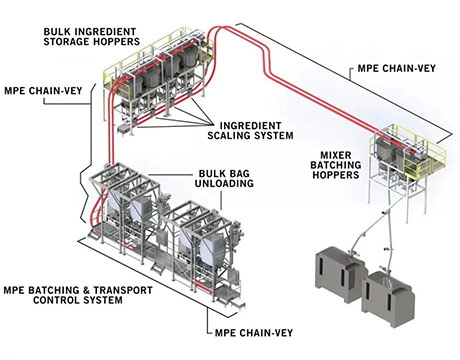
Vacuum Conveying is the process of moving bulk dry materials, such as powders, from place to place within a factory using suction. The material is transferred in a network of tubing from the pick up point or source to the customers process. Most Vacuum Conveying System transfer product based on a timed interval to the vacuum receiver. At the end of the timed sequence the discharge valve can open and the material conveyed can discharge in to the process.
There are two types of vacuum conveying. Dilute phase conveying and Dense phase conveying.
In Dilute phase conveying the material is entrained in the air stream and the is an almost equal part of air and product. This method is excellent for conveying almost any type of powder like sugar or flour.
In Dense pahse vacuum conveying the material is transferred in slugs within the convey tubing. The material moves slower then dliute phase conveying and is excellent choice for friable product or a blend of powders.
How does Vacuum Conveying Work?
Vacuum Conveying is the process of moving bulk dry materials, such as powders, from place to place within a factory using suction. The material is transferred in a network of tubing from the pick up point or source to the customers process. Most Vacuum Conveying System transfer product based on a timed interval to the vacuum receiver. At the end of the timed sequence the discharge valve can open and the material conveyed can discharge in to the process.
There are two types of vacuum conveying. Dilute phase conveying and Dense phase conveying.
Dilute Phase Conveying the material is entrained in the air stream and the is an almost equal part of air and product. This method is excellent for conveying almost any type of powder like sugar or flour.
Dense Phase Vacuum Conveying the material is transferred in slugs within the convey tubing. The material moves slower then dliute phase conveying and is excellent choice for friable product or a blend of powders.
Using Scope
Vacuum conveyors can be widely used in magnetic materials industry, food processing industry, plastic processing industry, lithium power industry, coatings industry, chemical industry and pharmaceutical industry etc.
Product Application
The vacuum conveying system is a professional dry bulk material transportation equipment that relies on negative pressure suction to realize automatic powder and granular material transmission in the factory. It supports two core conveying modes: dilute phase conveying and dense phase conveying, which can adapt to different material characteristics and production requirements. This conveying equipment has extremely wide industry versatility, covering magnetic materials, food processing, plastic processing, lithium battery new energy, coatings, chemical industry, pharmaceutical and other fields. It is suitable for automatic conveying of various ordinary powdery materials, mixed powders and fragile materials, realizing closed and automatic material handling for industrial production lines.
Product Advantages
1. Dual conveying mode adaptation. The system integrates dilute phase and dense phase conveying technology. Dilute phase mode is suitable for most common powder materials, while dense phase mode is specially optimized for fragile materials and mixed powder raw materials.
2. Material protection and low damage. Dense phase conveying adopts slow slug material transmission, with lower conveying speed compared with dilute phase conveying. It effectively avoids material fragmentation, deterioration and component separation, ensuring complete material performance.
3. Stable and timed conveying operation. Most vacuum conveying systems adopt fixed-time interval circulation feeding. The materials are stably transported to the vacuum receiver and automatically discharged through the discharge valve, realizing standardized and procedural feeding.
4. Fully enclosed clean conveying. The whole material transmission is completed in closed pipelines by negative pressure suction. It completely avoids powder leakage, dust overflow and material waste, meeting clean and environmentally friendly production standards.
5. Wide industrial compatibility. It can be flexibly applied in food, plastic, chemical, pharmaceutical, lithium power, coating and magnetic material industries, covering the conveying demands of most industrial dry powder and granular materials.
FAQ
Q: What are the two working modes of vacuum conveying system?
A: The system includes dilute phase conveying and dense phase vacuum conveying. The two modes correspond to different material characteristics and meet diversified production and conveying needs.
Q: What is the difference between dilute phase and dense phase conveying?
A: Dilute phase conveying mixes air and materials evenly at a fast speed, suitable for common ordinary powders. Dense phase conveying transports materials in slugs at a lower speed, which is more suitable for fragile products and mixed powders.
Q: What materials is dense phase conveying suitable for?
A: Dense phase slow-speed conveying can effectively protect materials, which is the best choice for fragile materials and various blended powder raw materials to avoid material damage and separation.
Q: How does the vacuum conveying system work?
A: It uses vacuum negative pressure suction to absorb dry bulk materials. Materials are transmitted through the pipeline to the vacuum receiver at fixed time intervals. After the timing process ends, the discharge valve opens automatically to complete material feeding.
Q: What industries can this vacuum conveying equipment be used in?
A: It is widely applicable to magnetic materials, food processing, plastic processing, lithium power, coatings, chemical and pharmaceutical industries for automatic conveying of dry powder and granular materials.


