|


Standard or total cleaning pneumatic conveying is suitable for a large number of applications. The line of transport is emptied and purged after each conveying cycle.
| Quantity: | |
|---|---|
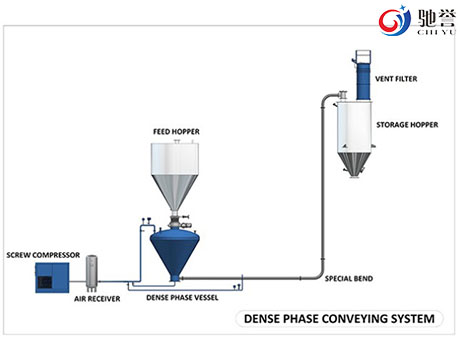
This kind of conveying system works by pushing the material along the pipe in a plug form, with the help of compressed air blown into the pipeline by a pressure vessel. By integrating an intelligent auxiliary air intake and booster configuration, the equipment maintains precise control over the morphology of the material plug. This advanced fluidization mechanism effectively prevents material bridging and frustrating pipeline blockages, ensuring a smooth, continuous transfer. Facility operators will notice the distinct, rhythmic, and controlled pulse of the pressure vessel as it efficiently moves heavy loads without the violent turbulence associated with older, less refined methods.
Dense phase pneumatic conveying systems can be used to transport a large range of bulk materials, both in the form of powders or granules. They can reach distances longer than 500 metres and capacities over 100 t/h. The unique low-speed, high-density transfer mechanism not only handles impressive volumes but also acts as a vital safeguard for product integrity. When handling complex mixed batches of ingredients, the dense plug movement effectively prevents material separation and segregation, ensuring that the exact recipe blend remains perfectly uniform from the initial feed point all the way to the final destination.
1.Minimal material degradation as the material is transported at low velocity. Unlike dilute phase alternatives that blast particles through pipes at high speeds, this method gently pushes the product. The tactile structure of delicate granules remains entirely intact, drastically reducing waste and preserving the physical characteristics of your valuable bulk solids.
2.Handles wide variety of material such as fragile, abrasive and friable as well as materials with high bulk densities. Whether you are moving soft, moisture-sensitive powders or highly abrasive minerals, the controlled plug-flow adapts to the physical demands of the input, offering an overwhelming advantage over traditional setups when dealing with challenging, heavy-duty applications.
3.Minimum wear and tear of the system. Because the internal friction is significantly reduced by the low-velocity movement, the metallic pipelines and bends experience a mere fraction of the abrasion. This translates to a substantially longer operational lifespan for all internal contact parts.
4.Minimum Maintenance. The drastic reduction in component wear directly results in fewer unexpected breakdowns. Facility managers benefit from extended service intervals and a highly predictable maintenance schedule, which lowers the total cost of ownership over the equipment's lifecycle.
5.No material spillage, no dust emission, clean environment. Operating within a fully enclosed pipeline network, the system securely traps fine particulates. You can visibly see the difference on the factory floor—surfaces remain free of settled dust, protecting worker respiratory health and easily meeting strict environmental compliance standards.
6.Low Noise operation. The absence of high-velocity air rushing through thin-walled pipes eliminates the deafening roar typical of older transfer methods. The resulting acoustic environment is a low, manageable hum, significantly improving the daily sensory experience for on-site personnel.
7.Low air flow rate. By adopting a high solid-to-air ratio, the setup requires significantly less compressed air. This low air consumption not only allows for smaller pipe diameter requirements—saving valuable installation space—but also drives down the overall energy expenditure of your plant's compressor network.


Every industrial facility presents a unique set of spatial and material challenges. Rather than offering a rigid, one-size-fits-all setup, the engineering approach focuses on deep customization. The design phase carefully accounts for the specific bulk density, inherent moisture content, and static electricity properties of your target materials. By analyzing these physical traits, the resulting engineering scheme is tailored to navigate complex, multi-point pipeline layouts without losing pressure or transfer efficiency.
To guarantee that the theoretical design translates flawlessly to the factory floor, professional laboratory testing is a mandatory step. Dedicated material fluidization and conveying tests are conducted using your actual product samples. This empirical approach replaces guesswork with hard data. Facility operators can review the exact pressure drops, optimal solid-to-air ratios, and plug formation behaviors before a single piece of steel is cut.
By validating the design parameters through rigorous lab trials, the risk of pipeline blockages or unmet capacity targets is virtually eliminated. This commitment to empirical testing ensures a high success rate for project implementation, delivering a reliable, long-lasting bulk material handling solution that perfectly aligns with your operational goals.